Protagonist vs Antagonist: Definitions, Differences & Examples
Protagonist vs antagonist- clear definitions, the real difference between them, types of each, and famous examples.
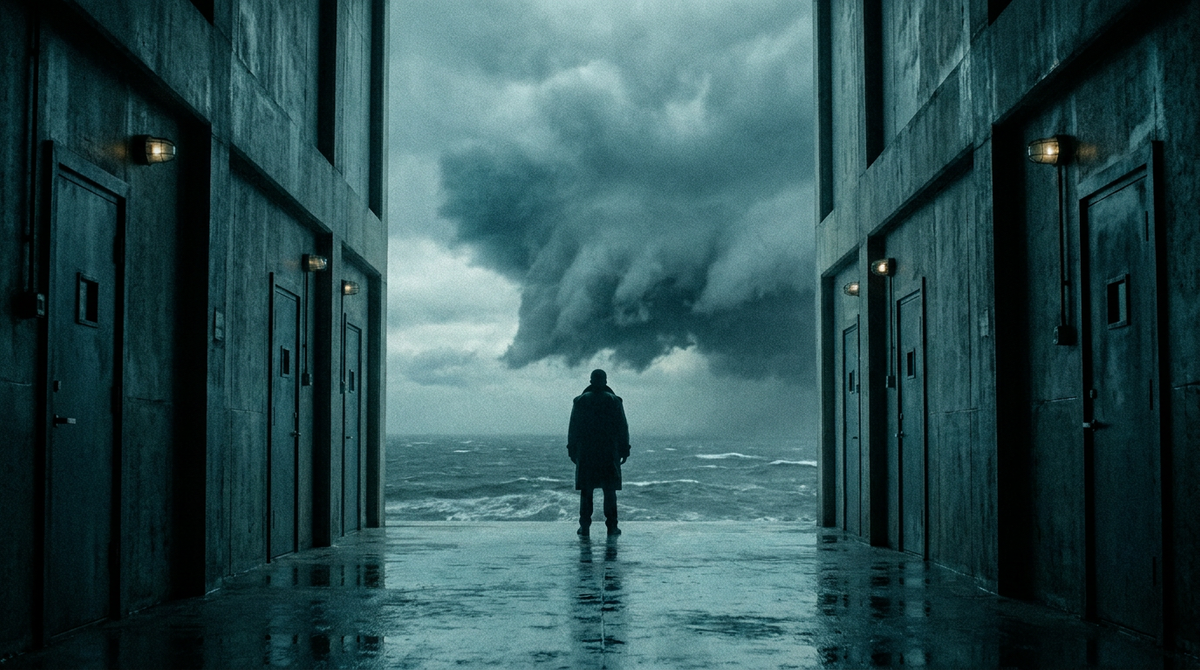
The protagonist is the central character a story follows — the one whose goal drives the narrative forward. The antagonist is the force that stands in their way. Between them sits the engine of nearly every story ever told: someone wants something, something opposes them, and the collision produces drama. Understanding the two roles — and the common misconceptions about each — is the foundation of understanding how stories work.
This guide defines both precisely, clears up the frequent confusion (no, the antagonist isn't always a "villain," and the protagonist isn't always a "hero"), covers the main types of each, and looks at why keeping these characters consistent — not just on the page but across every frame of a film — is the hardest unsolved problem in visual storytelling.
What is a protagonist?
The protagonist is the character whose pursuit of a goal forms the spine of the story. They are the character we follow most closely, whose decisions drive the plot, and whose change or refusal to change, the story is ultimately about. The word comes from the Greek prōtagōnistēs, "the first actor" aka the lead.
A crucial point that trips people up: the protagonist is not necessarily the hero. A hero is a protagonist with admirable, virtuous qualities. But plenty of protagonists are deeply flawed, morally grey, or outright criminal- the antihero is a protagonist we follow despite, or because of, their lack of conventional heroism. A story centered on a ruthless crime boss still has that crime boss as its protagonist. The role is structural (whom the story follows), not moral (whether they're good).
What is an antagonist?
The antagonist is the force that opposes the protagonist, the obstacle between them and their goal. Like "protagonist," the term is structural: it describes a function in the story, not a moral character. The antagonist creates the conflict that makes a story a story rather than a sequence of events.
And here's the misconception worth killing: the antagonist is not necessarily a villain — or even a person. A villain is an antagonist who is evil. But an antagonist can be a sympathetic rival, a loved one with incompatible goals, society itself, nature, a institution, or even an aspect of the protagonist's own psyche. What defines the antagonist is opposition, not malice.
Protagonist vs. antagonist: the real difference
The relationship is best understood as a structural one. The protagonist wants something — a goal that gives the story direction. The antagonist opposes that want — the resistance that gives the story conflict. The protagonist is the character the narrative follows and is built around; the antagonist is the character or force built specifically to obstruct them. Sympathy usually rests with the protagonist, but not always — sophisticated stories deliberately complicate it, granting the antagonist understandable motives and the protagonist real flaws.
The single most important thing to grasp is that both terms are roles, not value judgments. Good and evil are a separate axis entirely. You can have a heroic protagonist against a villainous antagonist (the classic mode), but also a villainous protagonist against a heroic antagonist, two sympathetic characters in irreconcilable opposition, or a protagonist whose only antagonist is themselves.
The main types of antagonists
The villain. The classic evil opponent — the antagonist with malicious intent. The most familiar type, and the one people wrongly assume is the only one.
The rival. An antagonist who isn't evil, just in competition — wanting the same prize, or an incompatible one. Often sympathetic.
Society or institution. The opposing force is a system — a government, a culture, a set of rules — rather than a single person.
Nature or circumstance. The antagonist is the environment itself: the storm, the mountain, the disaster. Survival stories run on this.
The inner antagonist. The opposition comes from within — the protagonist's own fear, addiction, guilt, or flaw. The hardest conflict to externalize, and often the most powerful.
Types of protagonists
The hero. The virtuous protagonist who embodies courage and moral clarity — the traditional lead.
The antihero. A protagonist who lacks conventional heroic qualities — flawed, cynical, or morally compromised — yet still the character we follow and, often, root for.
The villain-protagonist. A story that centers an antagonistic figure as its lead, making the audience inhabit a perspective they might morally reject.
The supporting or collective protagonist. Some stories distribute the protagonist role across an ensemble, or follow a community rather than a single individual.
Why consistency is the hard part
Defining these characters is the easy part. The genuinely difficult thing — in prose, and far more so on screen — is keeping them consistent. A protagonist's motivation established in act one has to still govern their choices in act three. What the antagonist knows, and when they learned it, has to hold across every scene. If a character learns something in scene 3, it must shape their behavior in scene 8 — and if it doesn't, the audience feels the story break, even if they can't name why.
In writing, this is the work of careful drafting and editing. In filmmaking, it compounds: the character must remain consistent not just in behavior but in appearance - the same face, build, and presence across hundreds of shots that may be filmed, or generated, out of order. This is exactly where AI video has historically failed. Most tools can produce a striking character in a single shot, but regenerate them in the next scene and the face drifts, the wardrobe changes, the identity dissolves. The protagonist stops being a person and becomes a series of lookalikes.
Solving that is the whole point of Induce. Induce reads a script the way a story editor does — tracking what each character knows, wants, and has experienced across the timeline (story-state memory), so a protagonist's motivation and an antagonist's knowledge stay coherent scene to scene. And its continuity graph holds each character's visual identity across every shot, so your protagonist looks like your protagonist from first frame to last, no matter which generation engine rendered a given scene. The structural roles you've designed -the want, the opposition, the arc- survive contact with the screen intact. That's the difference between a sequence of clips and an actual story.
What is the difference between a protagonist and an antagonist?
+The protagonist is the central character a story follows, whose goal drives the plot. The antagonist is the force that opposes them. Both are structural roles, not moral labels the protagonist isn't always good, and the antagonist isn't always evil.
Is the antagonist always the villain?
+No. A villain is an evil antagonist, but an antagonist is simply any force opposing the protagonist which can be a sympathetic rival, society, nature, circumstance, or the protagonist's own inner conflict.
Can the protagonist be the bad guy?
+Yes. A protagonist is whoever the story follows, regardless of morality. A villain-protagonist or antihero is still the protagonist — the role is about narrative centrality, not virtue.
Can a story have more than one protagonist?
+Yes. Ensemble stories distribute the protagonist role across multiple characters, and some narratives follow a collective or community as the protagonist.
Why is character consistency important in film?
+A character must stay consistent in both motivation and appearance across every scene for a story to feel coherent. In AI video specifically, holding a character's identity across shots is a notoriously hard problem one Induce solves with story-state memory and a continuity graph.
Related posts
What Is a Tracking Shot? Definition, Types & Examples
What is a tracking shot? A complete guide, famous examples, and when to use one plus what directors call them with AI.
By Prithvi Bharadwaj

What Is a Graphic Novel? A Complete Guide
What is a graphic novel? A complete guide and how creators bring panel-driven stories to the screen and how Induce plays a role in storytelling at scale.
By Prithvi Bharadwaj

Best AI Video Generation Tools in 2026
The best AI video generation tools in 2026- Kling 3.0 Omni, Seedance 2.0, Veo 3.1, and Nano Banana 2 compared, what the Sora shutdown taught the industry.
By Prithvi Bharadwaj