What Is a Tracking Shot? Definition, Types & Examples
What is a tracking shot? A complete guide, famous examples, and when to use one plus what directors call them with AI.
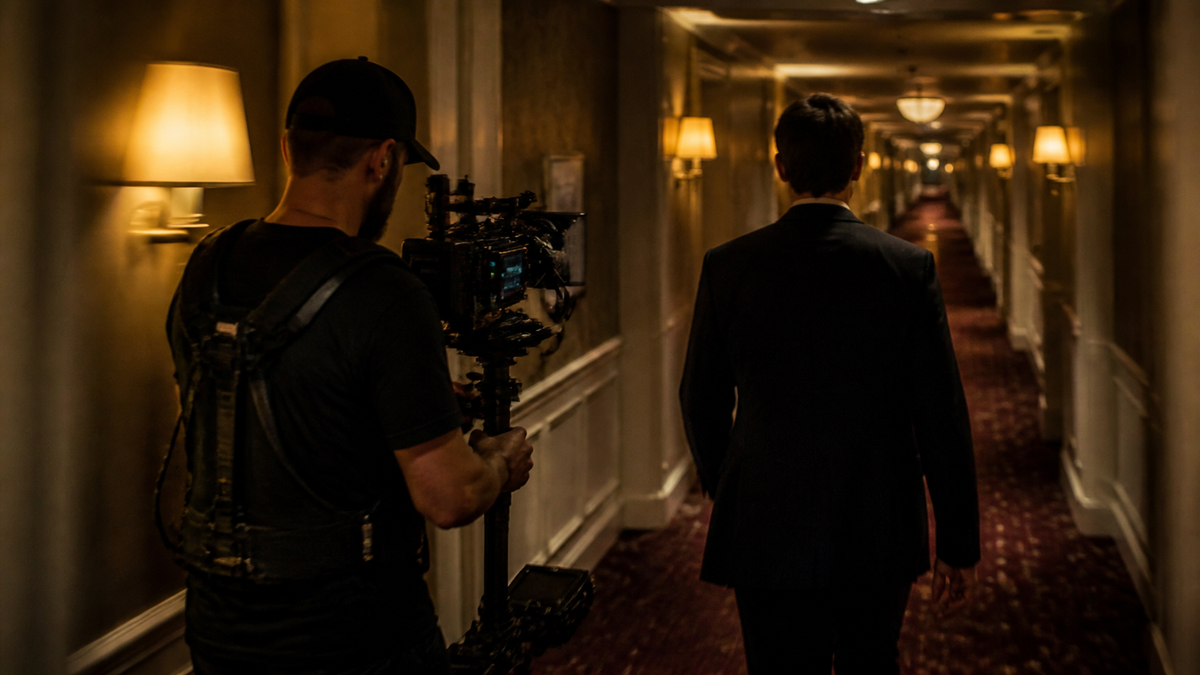
A tracking shot is a shot in which the camera physically moves to follow a subject or travel through a space - gliding alongside a character as they walk, pushing through a crowd, or sweeping across a location. The defining feature is motion of the camera itself: unlike a zoom, which magnifies from a fixed position, a tracking shot changes the camera's actual location, and with it the audience's point of view in space.
It's one of the most expressive tools in a filmmaker's vocabulary, and also one of the most misunderstood — "tracking shot," "dolly shot," and "panning" get used interchangeably when they describe genuinely different things. This guide defines the tracking shot precisely, separates it from its cousins, walks through the main types with examples, and looks at when — and why — directors reach for one.
The precise definition
A tracking shot moves the camera through space, typically to follow a subject or reveal an environment. Historically the term comes from the practice of laying physical track — like railroad track — and rolling the camera along it on a wheeled dolly, which is why "tracking" and "dolly" became entangled. Today a tracking shot can be achieved on track, on a Steadicam, on a gimbal, on a vehicle, or with a drone; what makes it a tracking shot is that the camera travels, and the audience travels with it.
Three things define the feel of a tracking shot: the camera occupies a moving point of view, perspective shifts continuously as the camera passes through space (foreground and background slide against each other — true parallax), and the movement is usually motivated, following a subject or leading the eye toward something.
Tracking shot vs. dolly vs. pan: untangling the terms
This is where most confusion lives, so let's be precise.
A pan keeps the camera in a fixed position and rotates it horizontally — like turning your head to follow something while standing still. The camera's location doesn't change, only its angle. A tilt is the same thing vertically. Because the camera doesn't travel, there's no parallax; it's rotation, not translation.
A dolly shot moves the camera toward or away from a subject, usually on a wheeled rig. Strictly, a dolly is one method of executing camera movement; a dolly-in or dolly-out is a push toward or pull away from the subject. Many people use "dolly shot" and "tracking shot" as synonyms, and in casual use that's fine — but the useful distinction is direction and intent: a dolly typically moves toward or away, while a tracking shot typically moves alongside or through, following a subject laterally or traveling across a space.
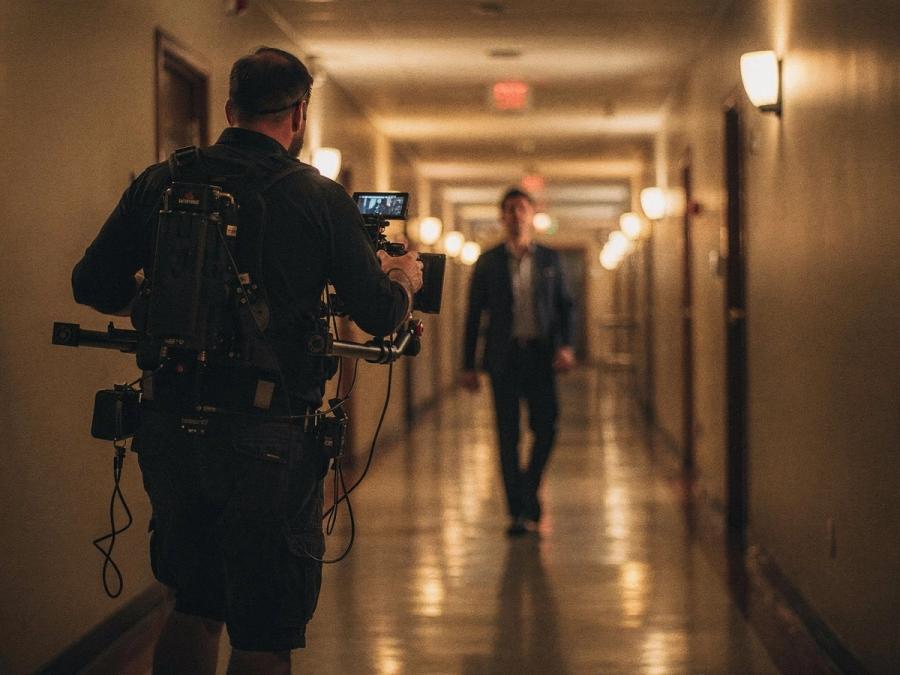
A Steadicam or gimbal shot is a tracking shot executed with a stabilized body- or hand-mounted rig rather than track, freeing the camera to follow a subject up stairs, around corners, and through doorways — movement that laid track can't manage.
The short version: pan rotates, dolly pushes in or out, tracking travels alongside or through. All three move the frame, but only the dolly and tracking shot move the camera through space, and only they produce parallax.
The main types of tracking shots
The following shot. The camera trails or leads a moving subject behind a character walking down a corridor, or ahead of them as they advance. It binds the audience to the character's journey; we go where they go.
The lateral tracking shot. The camera moves sideways, parallel to the subject or scene gliding alongside a character walking, or sweeping past a row of subjects. Often used to survey a space or hold a character in profile through a long beat.
The Steadicam long take. A continuous tracking shot, often several minutes, that follows a character fluidly through a complex environment. Famous as a virtuoso device — the unbroken walk through a nightclub kitchen, the trip through a hotel's corridors — because the uninterrupted movement immerses the audience completely.
The vehicle or aerial track. The camera mounts to a car, crane, or drone to follow action at speed or sweep across a landscape — chases, reveals, establishing moves that travel over terrain.
The arc shot. A tracking shot that curves around a subject rather than moving in a straight line, circling a character to build intensity or reveal them from changing angles.
Why directors use tracking shots
A tracking shot does work no static frame can. It immerses by moving the audience's point of view through space, it puts them inside the scene rather than observing it from outside. It reveals, traveling through an environment uncovers information in a controlled sequence, a reveal choreographed in real time. It builds momentum — sustained movement creates kinetic energy, which is why action and chase sequences lean on it. And the long, unbroken tracking take signals mastery; the technical difficulty itself becomes part of the effect, telling the audience that what they're watching is happening continuously, in one breath.
The trade-off is cost and complexity. Track has to be laid and leveled; Steadicam operation is a specialized craft; a single long take can consume a shooting day in rehearsal and resets. The tracking shot has always been one of the most resource-intensive tools in the kit.
How tracking shots get called in AI filmmaking
Every technique here is, at bottom, a way of translating intent into camera movement: follow her, travel through the space and reveal it, circle him as the tension rises. The director thinks in those terms; a director of photography and a dolly grip translate them into physical motion.
That translation is exactly how movement works in Induce. Upload a screenplay and Induce breaks it into shots, with a virtual DP composing framing and movement from each scene's emotional beat — a following shot where the script stays with a character, a sweeping reveal where it opens onto a new location. You direct by intent rather than by rig: describe what the movement should do, not how to build it. And when a specific moment needs a specific call- a lateral track here, an arc there, you override that single shot without disturbing the cut around it.
Underneath, each shot routes to the engine best suited to it — motion-complex coverage to Kling 3.0 Omni, narrative sequences to Seedance 2.0, hero moves to Veo 3.1- while the continuity graph keeps your character consistent through every reframe. The grammar of camera movement doesn't change. What changes is that the expensive part, laying the track is no longer the thing standing between the idea and the shot.
What is a tracking shot in simple terms?
+A shot where the camera physically moves through space, usually following a subject or traveling across a location so the audience's point of view moves too.
What's the difference between a tracking shot and a dolly shot?
+They overlap, and many people use them interchangeably. The useful distinction: a dolly shot typically moves toward or away from a subject, while a tracking shot typically moves alongside or through a space, following a subject. Both move the camera through space; a pan, by contrast, only rotates it.
Is a tracking shot the same as a pan?
+No. A pan rotates the camera from a fixed position; a tracking shot moves the camera's actual location. Only the tracking shot produces parallax the sense of traveling through space.
How do you make a tracking shot?
+Traditionally on laid track with a wheeled dolly; today also with Steadicam, gimbals, vehicle mounts, or drones. In AI tools like Induce, camera movement is generated from the scene's intent and can be overridden per shot.
Why are tracking shots used?
+To immerse the audience in a scene, reveal an environment in a controlled sequence, build kinetic momentum, or demonstrate technical mastery through long unbroken takes.
Related posts
Protagonist vs Antagonist: Definitions, Differences & Examples
Protagonist vs antagonist- clear definitions, the real difference between them, types of each, and famous examples.
By Prithvi Bharadwaj
What Is a Graphic Novel? A Complete Guide
What is a graphic novel? A complete guide and how creators bring panel-driven stories to the screen and how Induce plays a role in storytelling at scale.
By Prithvi Bharadwaj
Best AI Video Generation Tools in 2026
The best AI video generation tools in 2026- Kling 3.0 Omni, Seedance 2.0, Veo 3.1, and Nano Banana 2 compared, what the Sora shutdown taught the industry.
By Prithvi Bharadwaj