What Is a Zoom Shot? Definition & Examples
What is a zoom shot? Definition and examples- zoom vs dolly, crash zooms, slow zooms, and the dolly zoom plus when to use each and how directors call them.
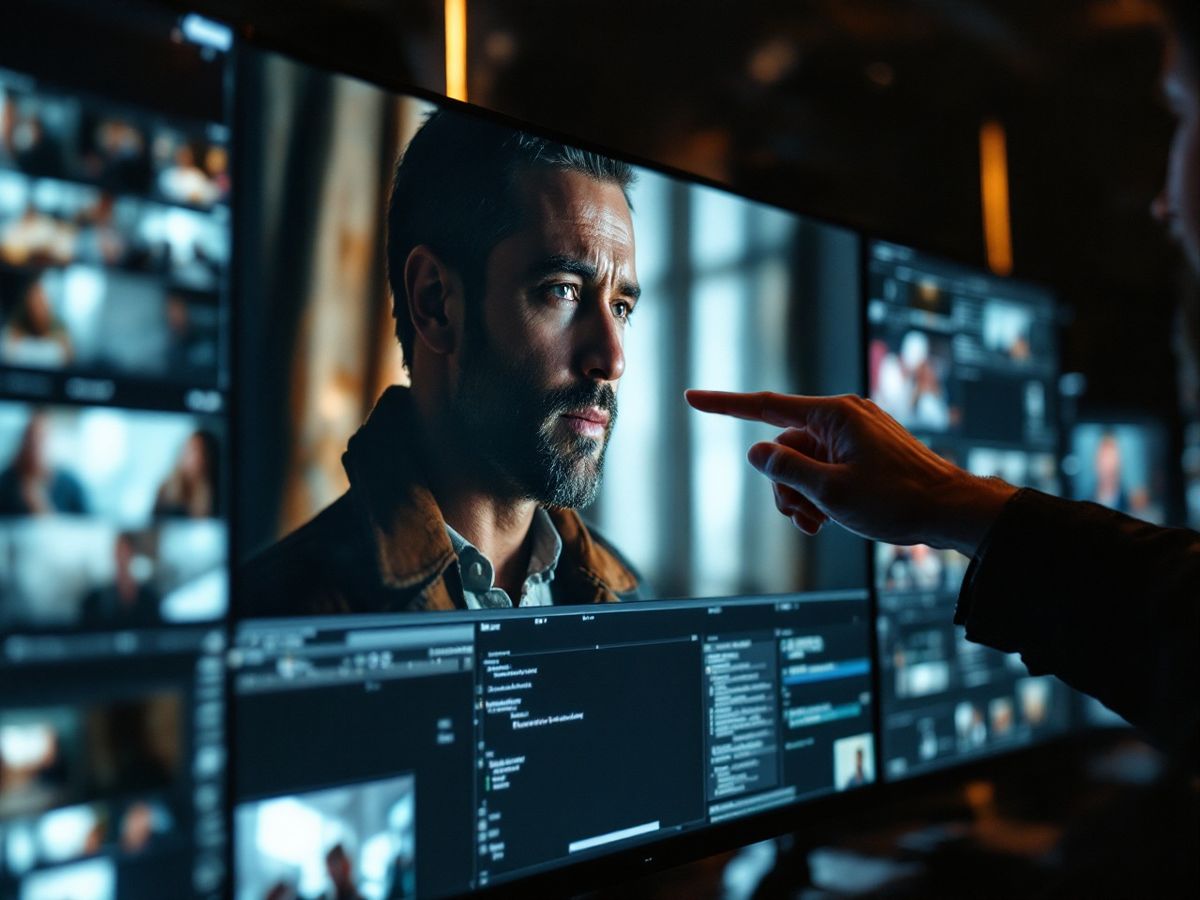
A zoom shot is a camera technique in which the lens's focal length changes during the shot magnifying or shrinking the subject in the frame while the camera itself stays put. Zoom in, and the subject grows larger and closer; zoom out, and the frame widens to reveal more of the world. No wheels roll, no operator walks: the entire movement happens inside the glass.
That last detail is the whole key to understanding the technique, because the zoom has a sibling it's constantly confused with- the dolly, and the difference between them isn't trivia. It changes what the audience feels. This guide defines the zoom shot precisely, separates it from the dolly once and for all, walks through the main types with examples, explains when directors reach for each, and looks at how shots like these get called in modern, AI-assisted filmmaking.
The precise definition
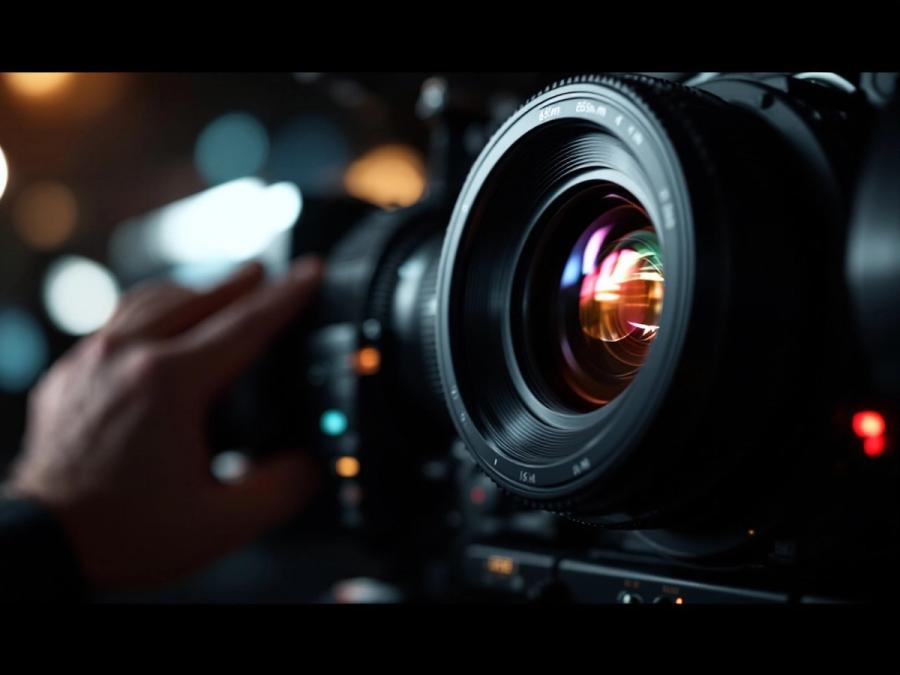
A zoom shot changes the focal length of a zoom lens during recording say, from 24mm out to 100mm which optically magnifies the image. Three things are worth fixing in mind:
- The camera does not move. All apparent motion is optical.
- Perspective does not change. Because the camera's position is fixed, the spatial relationships between foreground and background stay locked; everything in frame simply gets uniformly bigger or smaller.
- It requires a zoom lens. A prime (fixed-focal-length) lens can't zoom; the technique is inseparable from the glass.
That second point of frozen perspective is what gives the zoom its particular flavor. It doesn't feel like moving through space. It feels like attention tightening, like a pair of binoculars raised to the eye. Audiences register it, even if they can't name it.
Zoom vs. dolly: the distinction that actually matters
A dolly shot (or push-in) physically moves the camera toward or away from the subject, usually on tracks or a stabilized rig. To a casual eye, a dolly-in and a zoom-in do the same thing: the subject gets bigger. To the audience's nervous system, they are opposites.
When the camera physically moves, perspective shifts: foreground objects slide past, the background's relationship to the subject changes, parallax tells your brain you are walking closer. It feels immersive, embodied the way human vision works, because humans move; they don't zoom.
When the lens zooms, perspective freezes: the world flattens slightly and magnifies uniformly. Nothing about the image says "we moved." It feels observational, voyeuristic, sometimes clinical — surveillance footage, a documentarian's long lens, a sniper's scope.
The practical rule directors carry: dolly to bring the audience into the scene; zoom to make the audience watch it. Neither is better. They are different sentences in the same language.
The main types of zoom shots
The slow zoom (creep zoom)
A gradual, often barely perceptible tightening over many seconds. The audience doesn't consciously notice the frame closing in — they just feel the pressure rising. Slow zooms are the workhorses of dread and dawning realization: a character processing terrible news while the walls of the frame quietly close around them. Used heavily in 1970s thrillers and revived constantly in prestige drama for exactly that simmering effect.
The crash zoom
The opposite temperament: a violent, fast snap from wide to tight (or tight to wide) in a fraction of a second. Crash zooms are loud, attention-grabbing punctuation — comedic double-takes, kung-fu reveals, sudden shock. Because they're so conspicuous, they carry a stylistic signature; certain directors have made the crash zoom practically a watermark. Use sparingly: one crash zoom is a jolt, ten is a tic.
The dolly zoom (the "Vertigo effect")
The famous hybrid: the camera dollies in one direction while the lens zooms in the other, keeping the subject the same size in frame while the background warps — stretching away or looming forward. Because subject scale stays constant while perspective visibly distorts, the effect reads as the world itself becoming unstable. First made famous as a visualization of vertigo, it has since become cinema's shorthand for realization, dread, and the ground shifting under a character — used memorably for a police chief's dawning horror on a crowded beach.
The zoom-out reveal
Starting tight on a detail and widening to expose context: a face, then the empty room around it; a hand, then the crime scene. The zoom-out weaponizes the technique's observational quality — the audience is shown how much they couldn't see.
A note on the zoom's reputation
The zoom has gone in and out of fashion. Heavily used in the 1960s–70s (cheap, fast, no track to lay), it became associated with TV documentaries and exploitation films, and a generation of cinematographers treated it as déclassé — "if you want to get closer, move the camera." Modern filmmaking has largely made peace with it: the zoom's detachment is now understood as a choice, deliberately deployed for irony, surveillance-feel, retro texture, or that documentary immediacy scripted drama sometimes borrows. The lesson for any filmmaker: the zoom isn't a budget compromise; it's a meaning.
When to use a zoom shot
A quick decision guide:
- Rising dread or realization, slowly: slow zoom in.
- Shock, comedy, or stylized punctuation: crash zoom.
- A character's world destabilizing: dolly zoom.
- Recontextualizing what the audience thinks they know: zoom-out reveal.
- You want the audience in the scene, moving with a character: don't zoom — dolly.
- You want the audience watching the scene, detached or covert: zoom.
How shots like this get called in AI filmmaking
Here's where the craft meets the present. Every technique in this article is, at bottom, a way of translating an emotional intention into camera mechanics — dread becomes a slow creep of focal length; destabilization becomes counter-moving dolly and zoom. Directors don't think in millimeters; they think in what the audience should feel, and a director of photography translates.
That translation is exactly how direction works in Induce. Upload a screenplay and Induce breaks it into shots, with a virtual DP composing framing, lensing, and movement from each scene's emotional beat — wide for the silence, close for the confession, a slow tightening where the dread builds. You direct by intent: tell it "I want the audience to feel the ground shift under her," not "counter-zoom at 2mm per second against a 3-foot dolly pull." And when a specific shot needs a specific call — you want that crash zoom, exactly there — you override that one shot locally, without disturbing the cut around it.
Underneath, each shot routes to the engine built for it — motion-heavy coverage to Kling 3.0 Omni, narrative sequences to Seedance 2.0, hero frames to Veo 3.1, stylized looks to Nano Banana 2 — while the continuity graph keeps your characters consistent through every reframe and re-take. The grammar of the zoom, the dolly, and the cut doesn't change. What changes is that knowing why a slow zoom works is once again the director's whole job — the translation into mechanics is handled.
Want to see your script with coverage framed to the beat? Upload it to Induce →
What is a zoom shot in simple terms?
+A shot where the lens magnifies the image, zooming in or out while the camera itself stays still. The subject appears closer or farther, but perspective doesn't change because the camera never moves.
What's the difference between a zoom and a dolly?
+A zoom changes focal length with the camera fixed, so perspective stays frozen and the move feels observational. A dolly physically moves the camera, shifting perspective and parallax, which feels immersive like walking closer. Dolly to enter a scene; zoom to watch it.
What is a crash zoom?
+A very fast, deliberately conspicuous zoom — wide to tight in a fraction of a second — used for shock, comedy, or stylized punctuation.
Can AI generate zoom shots and camera moves?
+Yes. In Induce, a virtual DP translates the emotional intent of a scene into framing and movement including zooms, push-ins, and reveals and any individual shot's camera call can be overridden locally without re-rolling the rest of the cut.