Best AI Video Generation Tools in 2026
The best AI video generation tools in 2026- Kling 3.0 Omni, Seedance 2.0, Veo 3.1, and Nano Banana 2 compared, what the Sora shutdown taught the industry.
By Prithvi Bharadwaj
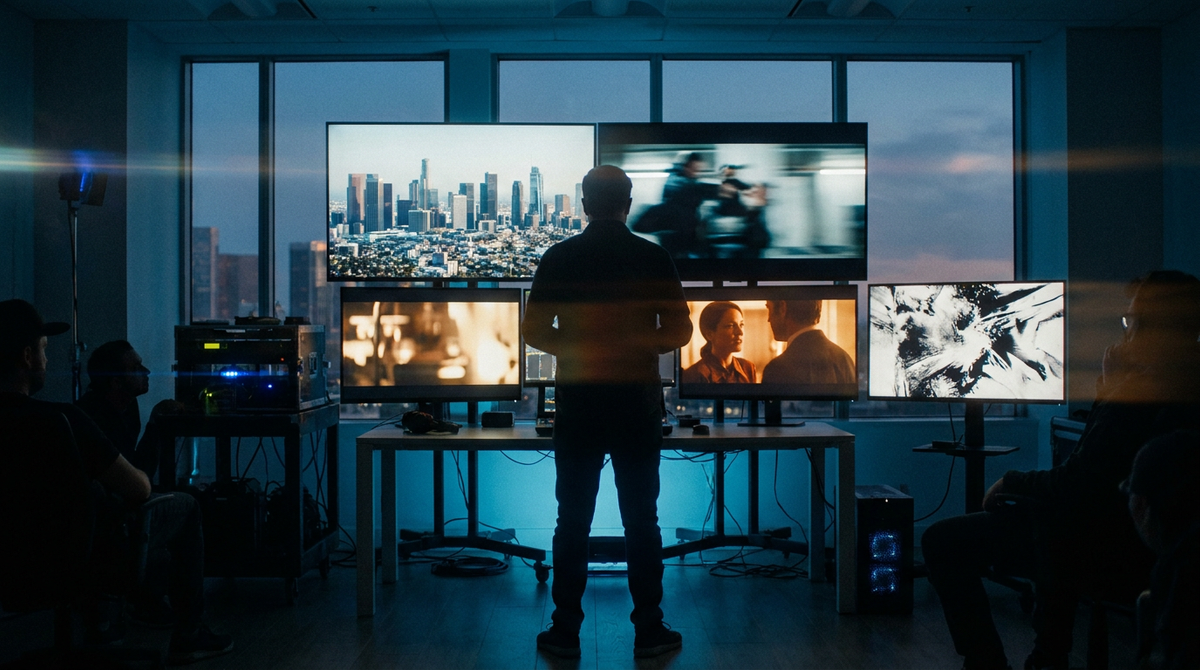
There is no single best AI video model in 2026. There is a best model for each shot and the sooner a production internalizes that, the better its output gets.
This wasn't true two years ago, when the question was simply which model produced the least broken motion. It isn't a hedge now; it's the defining fact of the field. The leading engines have specialized. One leads on motion and multilingual dialogue. One leads on multi-shot narrative with synchronized sound.
One leads on raw 4K fidelity. One leads on stylized expression that photoreal engines can't touch. Treating any one of them as "the best AI video tool" means accepting its weaknesses on every shot it isn't built for.
This guide compares the leading engines honestly, covers the most consequential event of the year, the Sora shutdown, and what it taught everyone who built on a single model and explains how working filmmakers and production teams now use all of the top engines at once.
The 2026 lineup: four engines, four specialties
Kling 3.0 Omni- the motion leader
KuaiShou's Kling 3.0 Omni is the strongest engine for motion-complex, dialogue-heavy, high-volume coverage. It generates multi-shot sequences natively (3–15 seconds) with subject consistency held across camera angles — a meaningful step beyond single-clip generation — and its audio is genuinely production-grade: native lip-sync across five languages, generated with the image rather than bolted on afterward. It also delivers the lowest cost-per-second of any top-tier model, which matters enormously once you're producing coverage rather than one-off clips.
Reach for Kling when: the scene is dialogue-driven, action-heavy, or you need volume — lots of coverage, fast, with sync sound. Its limits: native 1080p output; photorealism is strong but not the category's ceiling.
Seedance 2.0- the narrative leader
ByteDance's Seedance 2.0 is built for storytelling. Its defining capability is multi-shot narrative from a single generation pass: describe a sequence and it returns connected shots that read as one scene, in native 15–20 second clips — the longest native durations in the top tier. Its audio is fully synchronized with the image: speech, sound effects, and music generated together rather than assembled in post. For narrative sequences and long-form beats, it's the engine the others are measured against.
Reach for Seedance when: the work is a narrative sequence — a scene, not a shot — especially with dialogue, score, or sound design carrying the moment. Its limits: less raw 4K fidelity than the quality leader; the trade for narrative length.
Veo 3.1- the quality leader
Google DeepMind's Veo 3.1 holds the crown on raw visual fidelity: native 4K output, 48kHz synchronized speech, physics-accurate motion, and scene extension past 60 seconds. When a single image has to carry the weight — a hero shot, an establishing shot, the frame that goes on the poster — Veo is where it goes. Cinematic photorealism is the entire design brief, and it shows.
Reach for Veo when: the shot is the showcase — establishing shots, hero moments, anything where fidelity is the point. Its limits: premium quality at premium cost; not the economical choice for high-volume coverage.
Nano Banana 2 — the style leader
Nano Banana 2, built by Induce Labs and exclusive to the Induce platform, occupies the territory the photoreal engines deliberately avoid: stylized, non-photorealistic, high-contrast cinematic expression. Music video, mood sequences, claymation-flavored and illustrated looks — output that reads as crafted rather than captured. As the other engines converge on realism, stylization has become its own competitive axis, and Nano Banana 2 is purpose-built for it.
Reach for Nano Banana when: the brief is style — a look, a mood, a world that shouldn't look like a camera shot it. Its limits: stylized by design; it is not trying to win photorealism, and doesn't.
Head to head
Capability
Kling 3.0 Omni
Seedance 2.0
Veo 3.1
Nano Banana 2
Native resolution
1080p
1080p–4K
Native 4K
1080p
Native audio
5-language lip-sync
Speech + SFX + music, in sync
48kHz speech
Partial
Multi-shot
3–15 sec native
15–20 sec native
Scene extension 60s+
Single-shot native
Motion complexity
Leading
Strong
Strong
Stylized motion
Photorealism
Strong
Strong
Leading
Stylized, not photo
Cost profile
Lowest per second
Mid
Premium
Platform-included
Best for
Dialogue, action, volume
Narrative sequences
Hero & establishing
Style, mood, music video
Comparison based on publicly available model specifications as of June 2026.
The Sora lesson: a $1B model can die overnight
The most instructive event in AI video this year wasn't a launch. OpenAI deprecated Sora on April 26, 2026, with the API shutting down on September 24, 2026. Production teams that had built their pipelines on Sora as a single model — their continuity workarounds, their prompt libraries, their delivery schedules — lost those pipelines with a blog post.
The lesson is not "Sora was the wrong horse." Any of these engines could be deprecated, paywalled, or leapfrogged next quarter; the leaderboard genuinely reshuffles every few months, and the labs behind it (Google, ByteDance, KuaiShou)- answer to strategies far larger than your production schedule. The lesson is that single-model dependency is an architectural liability. A pipeline that requires one specific engine to exist inherits that engine's mortality.
If you're currently on Sora: the migration window closes September 24. The practical path is to move to an architecture where no single model is required which brings us to the real answer to this article's question.
The real answer: orchestration, not allegiance
If the best model is per-shot, then the best tool is whatever lets you use all of them — routed intelligently, inside one timeline, without juggling four subscriptions and stitching the output by hand.
That is what Induce is built for. Induce is not a fifth generation model competing with the four above; it's the pipeline that orchestrates them. You upload a screenplay — FDX, PDF, Fountain, or paste — and Induce reads it the way a script supervisor would: breaking every scene into shots, casting characters, wardrobe, and locations into a continuity graph that holds them consistent across the entire cut, and checking the story's logic before a frame is rendered. Then a routing agent dispatches each shot to the engine built for it:
- Read the shot. Each shot is classified by content — dialogue, action, establishing, or insert.
- Set the floor. Your quality tier sets the minimum engine; hero shots route to Veo 3.1 and Seedance 2.0.
- Follow the sound. Dialogue routes to Kling 3.0 Omni or Seedance 2.0 for lip-sync and synchronized audio.
- Never wait, never fail. If an engine is under load — or, as with Sora, ceases to exist -the agent substitutes the next-best automatically.
The practical consequences: about 80% less prompting than clip-by-clip tools, characters that look right in shot 1 and shot 40 regardless of which engine rendered them, the ability to give a note on any single shot without re-rolling the cut around it — and a pipeline that survived the Sora shutdown without noticing, because nothing in it required Sora to exist. When the next great model ships, it slots into the routing options and your existing projects simply get better.
How to choose in 2026
Work from the job, not the leaderboard:
- One standalone clip, photoreal: go straight to Veo 3.1.
- A dialogue scene or high-volume coverage: Kling 3.0 Omni.
- A narrative sequence with sound carrying it: Seedance 2.0.
- A stylized look: Nano Banana 2, via Induce.
- A film, a campaign, anything multi-shot where the story has to hold: don't choose — orchestrate. Upload the script to Induce and let the routing agent cast the right engine per shot, with continuity held across the cut.
And whatever you pick, apply the Sora test: if this model disappeared in September, would my pipeline survive? If the answer is no, the model isn't your problem — the architecture is.
Frequently asked questions
What is the best AI video generation tool in 2026? Per shot, not per platform: Kling 3.0 Omni leads on motion and dialogue, Seedance 2.0 on multi-shot narrative, Veo 3.1 on 4K quality, Nano Banana 2 on stylized expression. For multi-shot work, the best tool is the orchestration layer that routes between them — which is what Induce does.
What is the best Sora replacement for filmmakers? Not another single model — that repeats the mistake. With Sora's API shutting down September 24, 2026, the durable replacement is a model-agnostic pipeline. Upload your screenplay to Induce: the continuity graph rebuilds from the script in seconds and a comparable first cut is ready in hours.
Is Kling 3.0 or Veo 3.1 better? Different jobs. Kling wins dialogue-heavy, motion-complex, high-volume work at the lowest cost-per-second; Veo wins native-4K hero and establishing shots. Production pipelines use both, routed per shot.
How do AI video tools keep characters consistent across shots? Individual engines hold consistency within a clip or short sequence at best. Across a whole cut, you need a continuity layer above the engines - Induce's continuity graph defines each character once and holds them across every shot, regardless of which engine rendered it.
How much do these tools cost? Per-engine pricing varies (Kling is the volume-economical pick; Veo is premium), and running several subscriptions multiplies cost and overhead. Induce includes all four engines on every tier, including the free beta, under one billing line.