What Is Claymation? Techniques & How It's Made
A complete guide to clay animation-armatures, frame rates, replacement animation, why the look endures, and how filmmakers get it with AI today.
By Prithvi Bharadwaj
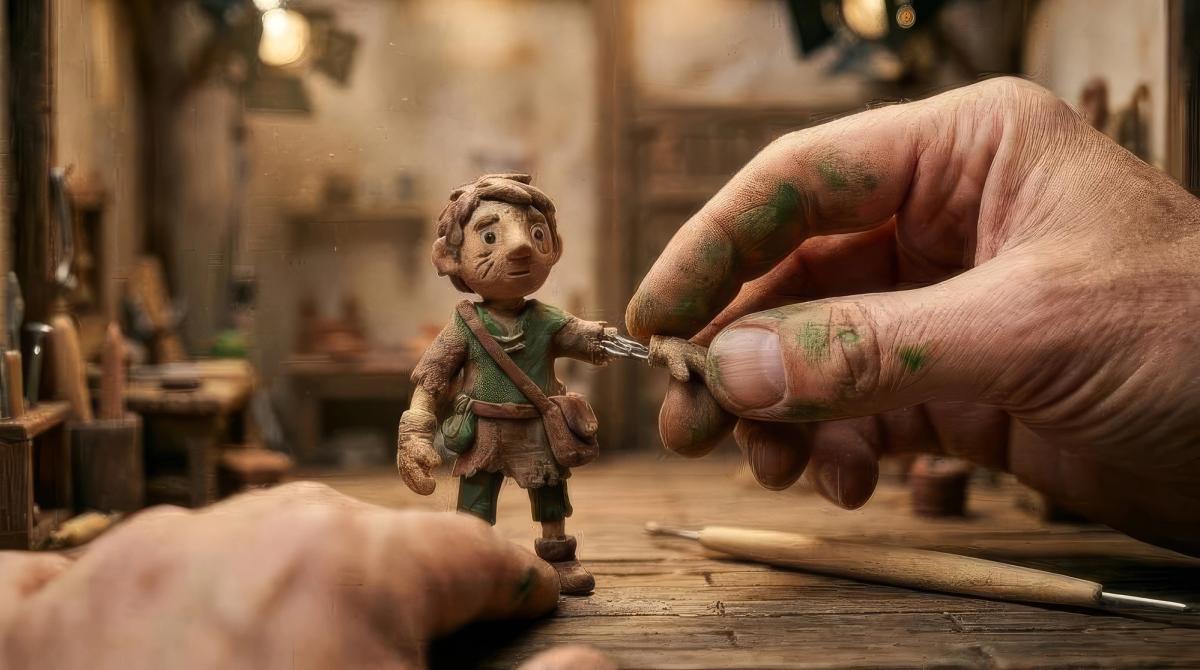
Claymation is stop-motion animation performed with clay. An animator sculpts characters from plasticine or modeling clay, poses them in front of a camera, photographs a single frame, adjusts the pose by a few millimeters, and photographs again — repeating the cycle thousands of times until the still images play back as fluid motion. It is one of the oldest forms of animation and, despite a century of competing technology, one of the most beloved: audiences recognize the handmade texture of clay instantly, and they trust it.
This guide covers what claymation actually is, where the term came from, how the craft works in practice ; armatures, frame rates, replacement animation, and the unglamorous discipline of continuity- why the aesthetic refuses to die, and how filmmakers achieve the look today without spending a year at an animation stand.
Where the word comes from
"Claymation" began as a trademark, not a generic term. Animator Will Vinton, whose Oregon studio produced the California Raisins commercials and a string of clay-animated features and shorts, registered the word in the late 1970s to describe his studio's style. The name proved so apt that the public adopted it for the entire medium, the way "Kleenex" came to mean tissue. Today, claymation refers broadly to any stop-motion animation in which the characters and often the sets are sculpted from clay or clay-like materials.
The craft itself predates the name by decades. Clay animation experiments appear in the earliest years of cinema, and the medium produced recurring stars — Gumby in the 1950s, and later the work of Aardman Animations, whose Wallace and Gromit films brought claymation to a global audience and multiple Academy Awards.
How claymation is actually made
From the outside, claymation looks like play. From the inside, it is one of the most labor-intensive disciplines in filmmaking. Five elements define the process.
The armature
Under the clay of every serious claymation character sits an armature — a poseable skeleton, usually of twisted wire or machined metal with ball-and-socket joints. The armature does two jobs: it holds each pose precisely between frames, and it keeps the character from slumping. Clay is soft, studio lights are hot, and gravity never takes a frame off. Without an armature, a character melts and sags over a shooting day; with one, the animator can hit the same pose, or a millimeter past it, ten thousand times.
Frame rates and shooting "on twos"
Film plays at 24 frames per second. Animating "on ones" means creating 24 distinct poses for every second of footage — the smoothest possible motion, and the most punishing schedule. Most claymation is shot "on twos": each pose is photographed twice, yielding 12 poses per second. The motion reads as slightly more staccato, which has become part of the medium's charm. Even on twos, the arithmetic is sobering: a 24-minute film requires on the order of 17,000 individual poses. This is why claymation features take years and why a skilled animator's output is measured in seconds per day.
Replacement animation
Dialogue poses a special problem: mouths are the fastest-moving, most precise part of a performance. Rather than resculpting a mouth between every frame, studios build libraries of interchangeable mouth shapes — one per phoneme — and swap them frame by frame to match recorded dialogue. Modern productions extend the technique with 3D printing, producing thousands of replacement faces with expressions graded in tiny increments. The animator becomes, in part, a librarian of faces.
Sets, lighting, and the locked-off world
A claymation set is a real miniature world: built scenery, practical lights, real depth of field. Everything must be locked down — a bumped light or a shifted prop between frames produces a visible "pop" in the footage. Crews mark positions, sandbag tripods, and control temperature, because warm clay behaves differently from cool clay. The camera itself is usually a stills camera driven by frame-capture software that lets the animator flip between the last frame and the live view, checking each movement against the one before.
Continuity: the invisible department
Here is the part audiences never see. Clay smudges. Colors fade under hot lights. Fingerprints accumulate. Characters get rebuilt, resculpted, and color-matched constantly so that the hero in scene 40 is indistinguishable from the hero in scene 1 — across months of shooting, multiple animators, and duplicate puppets. Claymation studios run what amounts to a continuity department whose entire job is making sure the audience never notices that the "one" character they're watching is actually a rotating cast of identical clones. Continuity is the silent craft inside the visible one.
Claymation vs. stop motion vs. CGI
The terms get tangled, so it's worth being precise. Stop motion is the umbrella technique: photographing physical objects one frame at a time. Claymation is stop motion performed specifically with clay. Puppet animation (fabric-and-silicone figures over armatures), cutout animation, and object animation are siblings under the same umbrella — which is why a film like Coraline is stop motion but not claymation. CGI, by contrast, builds and animates everything digitally; some modern films imitate the stop-motion look in CGI precisely because audiences respond to its texture.
Why the look endures
In an era when photorealistic imagery is cheap, claymation's value has inverted: imperfection became the luxury. Thumbprints in a surface, the faint shimmer of clay that's been handled, motion that's a half-step from smooth — these signal that a human made this, and audiences feel it before they can articulate it. That's why the style keeps resurfacing in music videos, title sequences, and commercials: it cuts through a feed of polished, frictionless imagery by being visibly, proudly handmade.
The honest trade-off has always been time. The look is priceless; the schedule is brutal. A three-minute claymation music video is weeks of work for a small team. A feature is years. For most working directors, claymation has been an aesthetic to admire and budget around, not one to actually use.
Getting the claymation look with AI
That trade-off is the part that's changed. Stylized, non-photorealistic generation — high-contrast, textured, handmade-feeling output that photoreal engines are explicitly not tuned for — is its own category of AI video now, and it's the category Induce's proprietary engine, Nano Banana 2, was built for. Where engines like Veo 3.1 chase physical realism, Nano Banana 2 is tuned for stylized cinematographic expression: music video, mood sequences, and looks that read as crafted rather than captured.
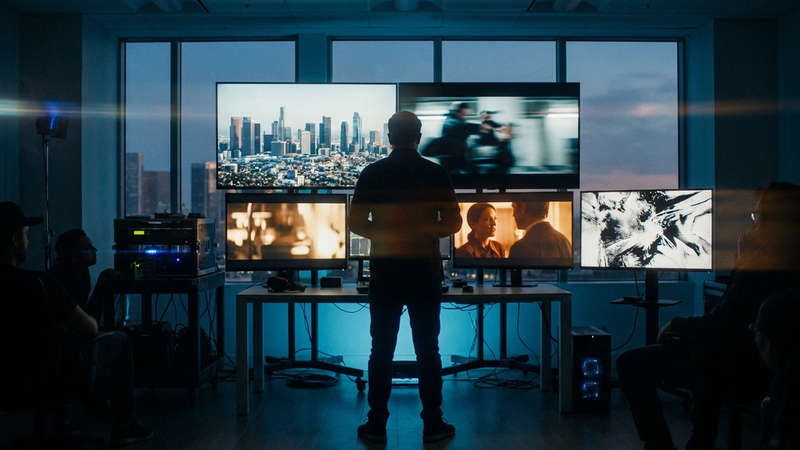
What makes the workflow feel like filmmaking rather than prompting is the pipeline around the engine. Upload a script and Induce breaks it down scene by scene, casts your characters into a continuity graph — a persistent memory that holds each character, wardrobe, and location consistent across the entire timeline — and routes each shot to the right engine: stylized sequences to Nano Banana 2, photoreal inserts to Veo 3.1, dialogue-heavy coverage to Kling 3.0 Omni. The continuity graph is doing, automatically, the exact job that claymation's resculpting crews do by hand: making sure the hero in scene 40 matches the hero in scene 1.
The result is that a claymation-flavored short or video that would take months at an animation stand can be a watchable cut in an afternoon with the continuity held, and with any individual shot adjustable without re-rolling the rest. The handmade aesthetic survives; the eighteen-month schedule doesn't have to.
Frequently asked questions
Is claymation the same as stop motion? Claymation is one type of stop motion — the type performed with clay. Stop motion also covers puppet animation, cutout animation, and object animation; Wallace and Gromit is claymation, while puppet-based films are stop motion but not claymation.
How long does claymation take to make? At 12–24 poses per second of finished footage, a skilled animator produces only seconds of film per day. Short videos take weeks; features take years.
What clay is used for claymation? Most productions use plasticine — an oil-based modeling clay that never dries out — sculpted over a wire or ball-and-socket armature that holds each pose between frames.
Why do claymation characters stay consistent across a film? Dedicated crews resculpt, rebuild, and color-match characters continuously across the shoot — a manual continuity discipline. In AI workflows, a continuity graph performs the same job automatically, holding a character's identity across every scene.
Can AI create claymation-style video? Yes. Stylized engines — Induce's Nano Banana 2 is purpose-built for this — generate non-photorealistic, high-contrast, handmade-feeling output from a script, with character continuity held across the whole cut.