What Is a “Controllable AI Director”? The Next Step for AI Filmmaking
A controllable AI director lets you direct shots, lighting, and continuity instead of just prompting. Here's what the term means and why it matters.

As AI video tools mature, a new category of term is emerging: the controllable AI director. It captures a real shift in how creators want to work with generative tools — not by surrendering creative decisions to a black box, but by directing AI with the same precision a filmmaker brings to a real set. Here’s what the term means and why it matters.
From “generate” to “direct”
The first wave of AI video was about generation: type a prompt, receive a clip, hope it’s usable. It’s powerful, but it puts the creator in the passenger seat. You describe; the model decides.
A controllable AI director flips that relationship. Instead of accepting whatever the model produces, the creator retains authority over the decisions that matter — framing, movement, lighting, tone, pacing, and continuity — while the AI handles execution. You direct; the model renders.
What “controllable” means in practice
Control in filmmaking has always meant having a vocabulary of deliberate choices. A controllable AI system exposes those same choices rather than hiding them behind a single text box:
- Shot control — specifying shot type, camera angle, and movement instead of hoping the model guesses right.
- Lighting and tone — directing mood and light intentionally, scene by scene.
- Lens and depth — choosing focal length and depth of field the way a cinematographer would.
- Continuity — locking characters and looks so they hold across shots rather than drifting.
The goal isn’t more settings for their own sake. It’s intent translation — letting a creator direct the feeling they want and having the system carry it out faithfully.
Why this matters for real production
Uncontrolled generation is fine for experiments and mood boards. But professional work — commercials, episodic content, branded campaigns — depends on hitting a specific vision repeatedly and consistently. A controllable AI director is what makes generative tools viable for that kind of work, because it provides:
- Predictability — the same direction produces the same intent, not a new gamble each time.
- Repeatability — an approved look can be reproduced across an entire project.
- Creative ownership — the director’s vision drives the output, not the model’s defaults.
- Team alignment — explicit choices can be shared, reviewed, and approved like any other production decision.
Controllable AI director vs. prompt-only tools
The simplest way to understand the difference: prompt-only tools optimise for surprise — you’re often delighted by what comes back, but you can’t reliably get it again. A controllable AI director optimises for intention — you decide what you want, and the system gets you there, shot after shot, consistently.
Induce is designed as a controllable, story-first layer for AI filmmaking giving creators precise control over shots, lighting, and continuity while the underlying models handle the rendering.
Key takeaways
- A controllable AI director gives creators authority over filmmaking decisions while AI handles execution.
- Control means real choices — shot type, movement, lighting, lens, and continuity — not just longer prompts.
- It’s what makes generative video viable for professional, repeatable production.
- The difference from prompt-only tools is intention over surprise.
Related posts
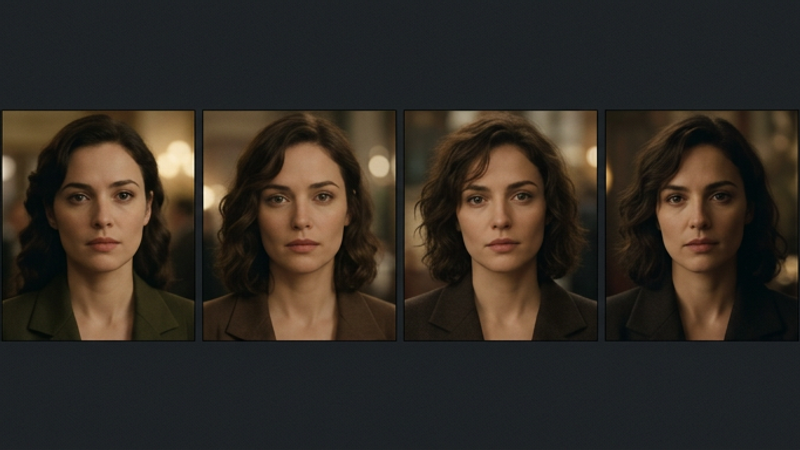
Why AI Video Breaks Continuity and How to Fix It
AI video looks great until the next shot. Here's why generative models break continuity, drifting characters, shifting light and how to actually fix it.
By Prithvi Bharadwaj
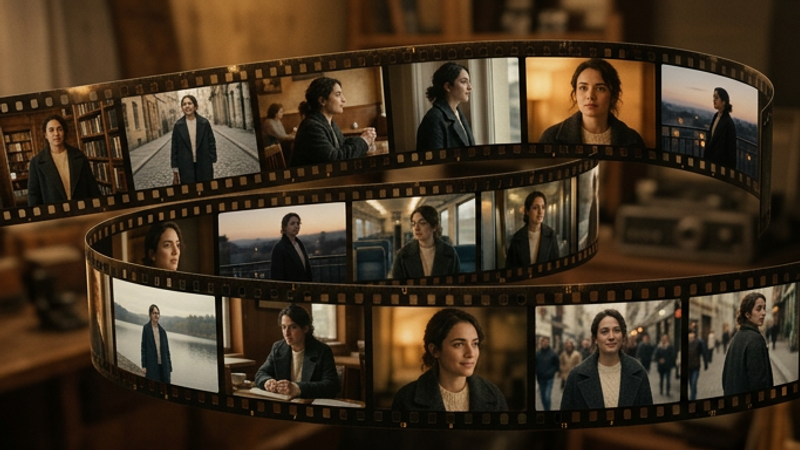
Continuity in Generative Video Production: A Practical Guide
A practical guide to continuity in generative video — the five layers to manage, a repeatable workflow, and why consistency is the key to scaling output.
By Prithvi Bharadwaj
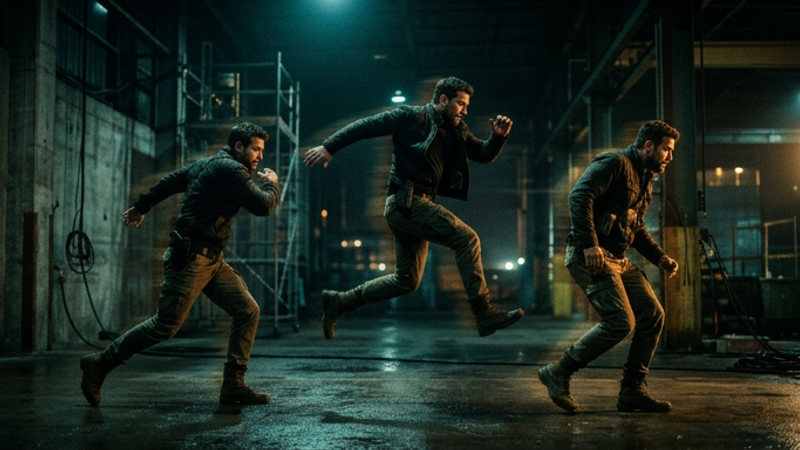
What Is a Jump Cut? Definition, Examples & How to Use One
What is a jump cut? A clear guide to the technique — how it works, why it's used, how it differs from other cuts, like the match cut and montage.
By Prithvi Bharadwaj