What Is Method Acting? Techniques, Examples & History
What is method acting? A complete guide to the technique — its origins, the core methods, famous examples, the controversy around it.
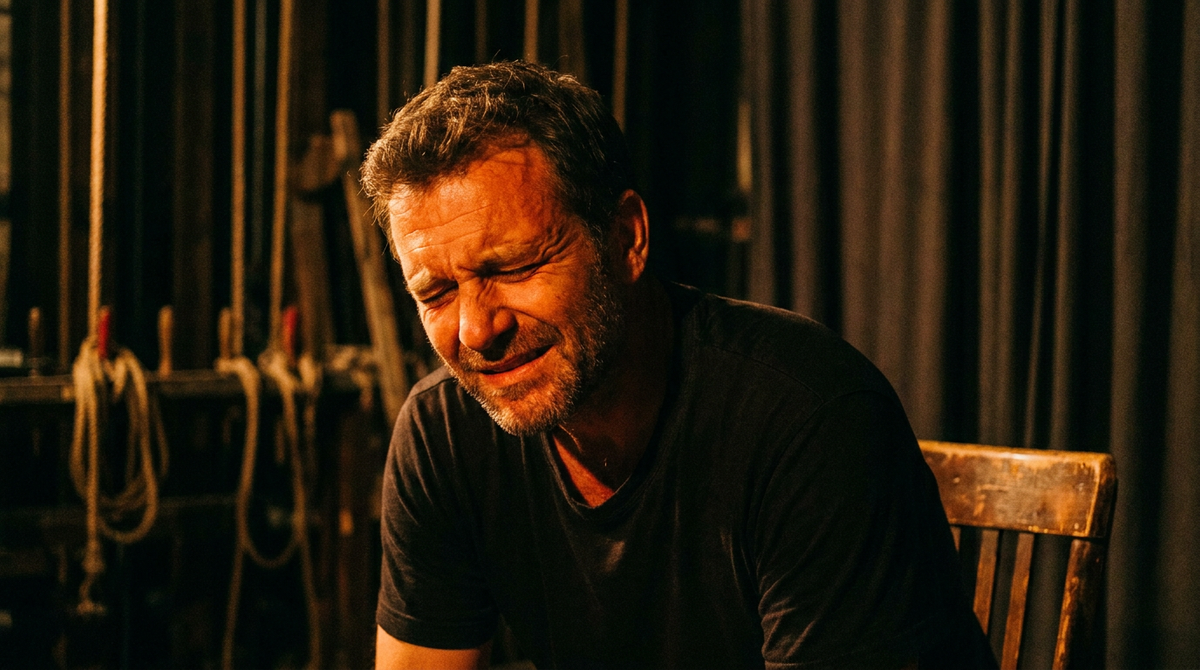
Method acting is an approach to performance in which an actor draws on their own emotions, memories, and lived experience to inhabit a character as authentically as possible -often staying in that character's emotional reality far beyond the moment the camera rolls. Rather than indicating a feeling from the outside, the method actor works to genuinely feel it, so the performance comes from a real internal place.
It's one of the most influential and most debated ideas in modern acting. This guide covers what method acting actually is, where it came from, the core techniques, famous practitioners, the controversy that surrounds it, and why the deeper principle beneath it that a character must be internally consistent to be believable, sits at the heart of all good storytelling.
The short definition
Method acting is a family of techniques that trains actors to use their own psychological and emotional resources to create truthful, lived-in performances. The defining idea is emotional authenticity: instead of imitating how a character would feel, the actor finds a way to actually experience an analogous feeling, so the performance reads as real rather than performed.
In its most intense (and most publicized) form, method acting extends beyond the scene — an actor might remain in character throughout a shoot, adopt the character's habits and circumstances in daily life, or undergo significant physical transformation. But that immersive extreme is only one expression of a much broader and more disciplined craft.
Where method acting came from
The method traces to the Russian theatre practitioner Konstantin Stanislavski, whose "system," developed in the early twentieth century, was the first rigorous attempt to give actors a repeatable process for creating truthful performance. Stanislavski's system emphasized understanding a character's objectives, given circumstances, and inner life.
In the mid-twentieth century, American teachers adapted Stanislavski's ideas into what became known as "the Method." The most influential figure was Lee Strasberg, whose work at the Actors Studio in New York emphasized affective memory — drawing on the actor's own remembered emotions. Other teachers who studied the same roots developed distinct branches: Stella Adler emphasized imagination and given circumstances over personal memory, and Sanford Meisner built a technique around truthful reaction and "living in the moment" with scene partners. These three approaches — Strasberg, Adler, Meisner — became the major American schools, all descended from Stanislavski but meaningfully different in practice.
The core techniques
While the schools differ, several techniques recur across method-based training:
Affective (emotional) memory. The actor recalls a personal experience that carries the emotion the scene requires, using that genuine feeling to fuel the performance. This is the technique most associated with Strasberg — and the most debated, for the psychological toll it can take.
Sense memory. Recreating physical sensations — heat, cold, hunger, pain — by recalling them in detail, so the body responds truthfully even when the stimulus isn't real.
Given circumstances. Fully working out everything true about the character's world — their history, relationships, pressures, and objectives — so choices flow from a coherent internal logic rather than the script's surface.
Substitution. Replacing a character's relationship or circumstance with an analogous one from the actor's own life, to make the stakes personally real.
Staying in character. Remaining in the character's emotional and behavioral reality between takes or across a shoot, to preserve continuity of the internal state. This is the most extreme and most controversial technique — and far from universal among method actors.

The hallmark: a character that holds together
What unites every branch of the method is a single goal: a character whose inner life is consistent and believable from the first scene to the last. The method actor isn't chasing a single powerful moment — they're building a continuous person, whose reactions in scene twelve are governed by what the character has experienced and learned by then. The emotional logic has to carry across the whole arc, or the audience feels the seam.
This is worth dwelling on, because it's the principle that outlives any single technique: a believable character is an internally consistent one. What they know, what they want, what they've been through — these have to remain coherent across every scene, or the performance, however intense in any one moment, stops adding up to a person.
Famous examples and the controversy
Method acting has produced some of cinema's most celebrated performances — and some of its most cautionary stories. Actors have gained or lost dramatic amounts of weight, learned demanding physical skills, lived in their characters' conditions, and remained in character for entire shoots. At its best, this commitment yields performances of startling truth.
But the method is genuinely controversial, and the criticism is worth taking seriously. Staying in a dark character's headspace for months can take a real psychological toll. "Immersive" behavior on set has sometimes shaded into making colleagues' work harder or more uncomfortable, raising fair questions about where commitment ends and self-indulgence begins. And many acclaimed actors reject the immersive extreme entirely, pointing out — often wryly — that acting is, after all, pretending, and that craft and imagination can reach the same truth without the personal cost. The honest view is that "method acting" spans a wide spectrum, and its disciplined, technique-driven core is very different from the headline-grabbing immersion that gets the most attention.
Method vs. classical acting
The method is often contrasted with classical or technical acting, which works from the outside in, building a character through voice, movement, gesture, and external choices, with emotion summoned through craft rather than personal experience. Method acting works largely from the inside out, starting with genuine internal feeling and letting the external follow. In practice, most working actors blend the two; the distinction is a spectrum, not a binary, and the best performers move fluidly along it depending on the role.
From the actor's craft to the story's logic
Step back from technique and method acting is really about one thing: making a character cohere as a real, consistent person across an entire story. That's an acting problem, but it's also a storytelling problem — and it's the exact problem that defines character-driven narrative in any medium, including AI-assisted filmmaking.
This is where the craft connects to what we build at Induce. A method actor holds a character's internal state across a shoot so their behavior stays consistent; Induce does something structurally similar for the story itself, through story-state memory — tracking what a character knows, wants, and has experienced across the whole timeline, so their actions in a later scene stay coherent with everything that came before. And just as a performance must be visually continuous as well as emotionally so, Induce's continuity graph holds each character's identity consistent across every shot. The actor brings the inner life; the system makes sure the story around them never loses track of who they are. Both are chasing the same thing the method has always chased: a character the audience fully believes.
What is method acting in simple terms?
+An approach where actors use their own emotions, memories, and experiences to genuinely feel what a character feels, creating a truthful, lived-in performance rather than imitating emotion from the outside.
Who invented method acting?
+Its foundations come from Konstantin Stanislavski's "system" in early-twentieth-century Russia, later adapted in America — most influentially by Lee Strasberg, alongside Stella Adler and Sanford Meisner, who each developed distinct branches.
Does method acting mean staying in character all the time?
+Not necessarily. Staying in character between takes is one extreme technique associated with the method, but it's far from universal many method actors rely on emotional and sense memory without that level of immersion.
Why is method acting controversial?
+Because its more immersive forms can take a psychological toll on the actor and sometimes affect colleagues on set, and because many respected actors argue the same truth can be reached through craft and imagination without the personal cost.
What's the difference between method and classical acting?
+Method acting works inside-out, starting from genuine internal emotion. Classical (technical) acting works outside-in, building the character through voice, movement, and external craft. Most actors blend both.
Related posts
What Is a Jump Cut? Definition, Examples & How to Use One
What is a jump cut? A clear guide to the technique — how it works, why it's used, how it differs from other cuts, like the match cut and montage.
By Prithvi Bharadwaj
Protagonist vs Antagonist: Definitions, Differences & Examples
Protagonist vs antagonist- clear definitions, the real difference between them, types of each, and famous examples.
By Prithvi Bharadwaj
What Is a Tracking Shot? Definition, Types & Examples
What is a tracking shot? A complete guide, famous examples, and when to use one plus what directors call them with AI.
By Prithvi Bharadwaj